
Grow Your
Wealth Without
The Confusion
Figure out how to generate the income you deserve.
Are You In Control Of Your Wealth?
Figure out how to generate the income you deserve.
Want To Earn More Money And Grow Your Wealth?
If you’re reading this, you probably have a decent job or small business of your own and an income that’s sitting just above the national average. But while you’re doing pretty well, you know you could be doing better. And you also know there are things you need to do so your money goes to the right places and starts to multiply on its own. So why aren’t you doing those things? It could be a mindset issue, a timing problem or simply the fact that you don’t know where to begin. As your personal wealth coach, this is where I come in.
What Does A Wealth Coach Do?
Most people think wealth is about money. As a wealth coach, however, I will help you expand your perspective on what is possible. We’ll help you articulate the life that you would like to live and highlight the things that have been getting in your way so that when we remove those things and replace them with habits, patterns and behaviors that will support you to live your wealthiest life, money flows from that.
My Services

Insight Session
Take the time to dive deep into your financial journey to date and the mental roadblocks which are holding you back from success.

Insight Session
Let’s talk about your goals and your mindset so we can make a plan for growing your wealth that works.

Insight Session
Want to generate more income? We’ll find out what’s holding you back before deciding how to move forward.

Financial Planning
Take care of the essentials before getting to the exciting plans which will grow your wealth for the long term.

Estate Planning
It won’t take long to make sure your family will have access to your assets if something happens to you.

Success Coaching
Work with me and let’s break down those barriers that are holding you back from really going for it.
Why Choose Nicky?

Years & Years Of Experience
I’ve been helping people take control of their wealth for thirty years.

Master Your Mindset
We all have set beliefs when it comes to wealth. We’ll work through yours to ensure they align with your vision.

Earn More!
Be even more promotable or take the leap into your own business by shifting beliefs and behavior that will potentially have you earning more.

Make The Right Decisions, Fast
Tired of wondering where to even start? Let me help you figure it out.

Take Action
With the team’s help, you’ll have assistance with keeping you on track of what’s the next action to prevent being overwhelmed on your journey to wealth.

Satisfaction Guaranteed
If you don’t think the coaching is brilliant in the first hour, I’ll refund your money, no questions asked.
Who I've Helped
Hear From Just A Handful Of My Happy Clients.
Let her guide you because it’s a wonderful experience.
- Wendy Horne
I came to see Nicky for a three hour Insight Session because I was just feeling really stuck with my money in the business like I wasn’t progressing. And out of the session, I’ve got clear goals of where to go next. I’ve got rid of some lifelong beliefs that just weren’t serving me at all . I’m really excited with the plans we’ve got in place to move forward. I will have a totally new concept of money and financially in place with my business. If you’re wondering whether the Insight Session is right for you, I would say absolutely go for it. You’re investing in moving forward. It’s definitely worth it. Don’t hesitate.
- Kimi Broadbent
Pilates Instructor
Nicky is there not to tell me what to do, But keep me in the direction I want to go in achieving my goals in my future. The return in investment is HUGE, I will be able to one day own a McDonald’s restaurant with confidence. I find that the more I’m challenged and the more I do it with Nicky, it’s just like training to run a marathon. You’ve got to keep doing it month after month, week after week to get it right. I’m comfortable with Nicky. It’s a person that I’m comfortable with that she will set me in the right direction. As our monthly coaching sessions are, things changed, and never the same. There’s always a new concern, a new issue or a new technique that I want to learn. Once you find that right coach, Why change?
- Chris Biden
McDonald's General Manager
Essential Insights
Tips and strategies to help you discover what’s possible when it comes to creating financial freedom.
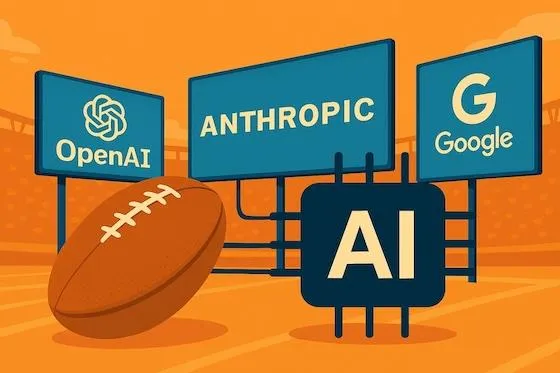
From AI Bowl to AI Bubble: 5 Risks for Australian Investors in 2026
The 2026 Super Bowl looked less like a football game and more like a very expensive infomercial for artificial intelligence – and that contrast is exactly what Australian investors should pay attention to.
Welcome to the “AI Bubble”
This year’s broadcast was effectively the “AI Bowl”. Around 23–25% of all commercials, 15 out of 66 national spots, featured AI either as the product or as the star of the story. OpenAI, Anthropic, Google, Amazon, Meta and a string of smaller players all turned up, along with non‑tech brands using AI as the hook for everything from booze to banking.
A 30‑second slot reportedly cost about USD 8 million on average, with some prime positions pushing past USD 10 million before you even count production. Industry analysts estimate that AI‑linked advertisers collectively dropped hundreds of millions of dollars on this one game, roughly double the tech spend seen during the “Crypto Bowl” earlier in the decade. That isn’t a sign of calm, measured capital allocation; it’s a land grab for mindshare.
What the AI ad blitz really signals
When nearly a quarter of the world’s most expensive ad inventory is devoted to AI, it tells us three important things about where we are in the cycle.
First, the industry is in an arms race for attention. Adweek described AI as being in a “messaging crisis”: years into the hype cycle, many brands are still relying on fuzzy promises of helpfulness, inevitability and magic, rather than clearly differentiated products and business models. That’s why so much money is going into broad brand positioning instead of specific, measurable offers.
Second, these campaigns are being funded with investors’ money. Several of the AI labs and platforms buying airtime are still loss‑making or only modestly profitable, yet they’re comfortable burning eight figures on a single night to shape their narrative. In plain language: shareholders today are paying for the chance that profits show up tomorrow.
Third, the contest is as much internal as external. Reports highlighted Anthropic using its Super Bowl slot to take an implicit swipe at OpenAI’s plan to run ads inside ChatGPT, turning the broadcast into a very public tussle over whose vision of AI will win. When companies spend millions jostling for position inside the same niche, it often means the growth pie is large – but also that competition will chew through margins over time.
The AI boom: powerful trend, frothy edges
Step away from the stadium and the numbers get even more striking. Recent analysis pegs global AI spending at around USD 2.52 trillion in 2026, roughly 44% higher than the previous year. On some projections, AI‑related outlays could make up the majority of IT investment before the decade is out.
That scale alone doesn’t mean “bubble”. Many of the use‑cases – from better customer service and software development to fraud detection, logistics and medical diagnostics – create genuine economic value. But there are clear bubble‑like signs at the edges: capital flooding into start‑ups with unproven business models, valuations that assume near‑perfect execution for decades, and a belief that every ambitious slide deck will translate into cash.
A better way to think about it is this: AI today looks like a real technological super‑cycle wrapped in patches of speculative excess. The likely path is not a total collapse, but a reset – tighter funding, more demand for evidence of returns, and a stark gap between a handful of durable winners and a long tail of companies that raised too much, too fast.
Why the spectacle is risky for your portfolio
For Australians watching from the couch, the Super Bowl is entertainment. For your money, it can be dangerous.
The first risk is that AI starts to feel inevitable. If you hear “AI” in every second ad and see every major tech name vying for attention, it’s easy to blur the distinction between “this technology will matter” and “this stock at this price is a good investment”. Inevitable technology does not automatically equal inevitable shareholder returns.
The second risk is that extreme spending looks normal. When a company can casually drop USD 8–20 million on a single ad buy, it’s tempting to assume the business must be rock‑solid, even if it’s actually burning cash just to stay in the race. Marketing budgets, especially at this scale, tell you more about ambition and available capital than about resilience in a downturn.
The third risk is portfolio concentration by stealth. If every conversation at work, online and at weekend barbecues revolves around AI, many investors end up funnelling more and more of their money into a small cluster of high‑profile stocks or thematic ETFs. Over time, a portfolio that was once reasonably balanced can become a narrow bet on a single theme without anyone deliberately deciding to take that level of risk.
The emotional tempo of the Super Bowl doesn’t help. The game is over in a few hours; the ads are all about quick impressions and instant reactions. Good investing is almost the opposite: slow, repetitive, a bit dull. It rewards people who can watch the show, enjoy it, and then do nothing rash on Monday morning.
A simple playbook: enjoy AI, invest like a grown‑up
You don’t need to swear off AI to invest sensibly. You just need a framework that stops the story from running your portfolio. A few straightforward habits go a long way.
1. The “BBQ test”
Strip away the hype, headlines and Super Bowl gloss. Would you still be comfortable owning this company or fund based on what it actually earns, how strong its balance sheet is, and how it competes? If the only reasons are “everyone’s talking about it” or “did you see that ad?”, it fails the BBQ test. That’s punting, not investing.
2. Keep AI as a satellite, not the core
For most Australians, the core of a sensible plan is boring on purpose: superannuation, broad Australian and global share exposure, some cash, and possibly bonds. That’s the foundation that compounds quietly over decades. AI and other hot themes belong in a small “satellite” sleeve around that core – a clearly defined, limited slice of your total investments, sized so that a blow‑up would hurt but not derail your future.
If you decide that, say, a single‑digit percentage of your investable assets is your maximum for speculative or high‑growth themes, you’ve already put a strong guardrail around your exposure. Whether the number is 5% or 10% matters less than the fact that you’ve set it deliberately.
3. Use percentages, not feelings
Feelings are strongest after big moves and big moments – like a hyped‑up Super Bowl campaign or a sudden surge in AI share prices. Percentages are boring and consistent. Decide in advance what share of your portfolio you’re comfortable allocating to themes like AI, and review it once or twice a year.
If AI holdings rally and that slice quietly swells beyond your chosen range, you take some profits and recycle them into the core. If prices fall and the slice shrinks, you can top it back up – or decide that the thesis has changed and move on. Either way, you’re responding to a plan, not to adrenaline.
4. Assume at least one “AI wobble”
History suggests almost every major tech shift comes with a phase where expectations outrun economics – and then a correction where they snap back together. Think about railways in the 1800s, dot‑coms in the late 1990s, or more recently, crypto. The technology often goes on to matter; the early investments don’t always reward late‑cycle buyers.
If you assume there will be at least one sharp AI wobble over the next decade – whether from regulation, competition, disappointing profits or simply fatigue – you’re more likely to size your bets sensibly, avoid leverage, and keep enough diversification to ride out the storm instead of being forced to sell at the bottom.
5. Measure stories by cash, not clicks
The final discipline is to judge AI companies the same way you’d judge any other business: by their ability to turn investment into sustainable, growing free cashflow per share. Super Bowl buzz, user numbers and download charts are interesting, but they’re not a substitute for cash coming in the door and staying there.
When you see giant AI brands taking swings at each other on the world’s most expensive advertising stage, remember who ultimately needs to be paid back: owners. The useful question is not “Who ran the cleverest spot?” but “Which of these businesses is most likely to translate massive spending into years of durable profitability?” The honest answer is usually “fewer than everyone expects”.
Let the “AI Bowl” stay on TV
The neat contrast for Australians is this. On one side, you have an “AI Bowl” where unprofitable firms can spend millions to shout for attention, valuations in parts of the market are being pulled higher by forecasts of USD 2.5 trillion‑plus in annual spending, and rivals are jostling for the right to be the name you remember from half‑time.
On the other, you have a quiet, repeatable investing routine: topping up super, owning broad market exposure, rebalancing once in a while, and – if you enjoy the story – carving out a clearly limited slice for AI knowing it may be bumpy. The technology may well change the world. Your edge is being willing to let companies fight it out on the world’s most expensive ad break while you stick to a sensible, boring plan that doesn’t live or die on the outcome.

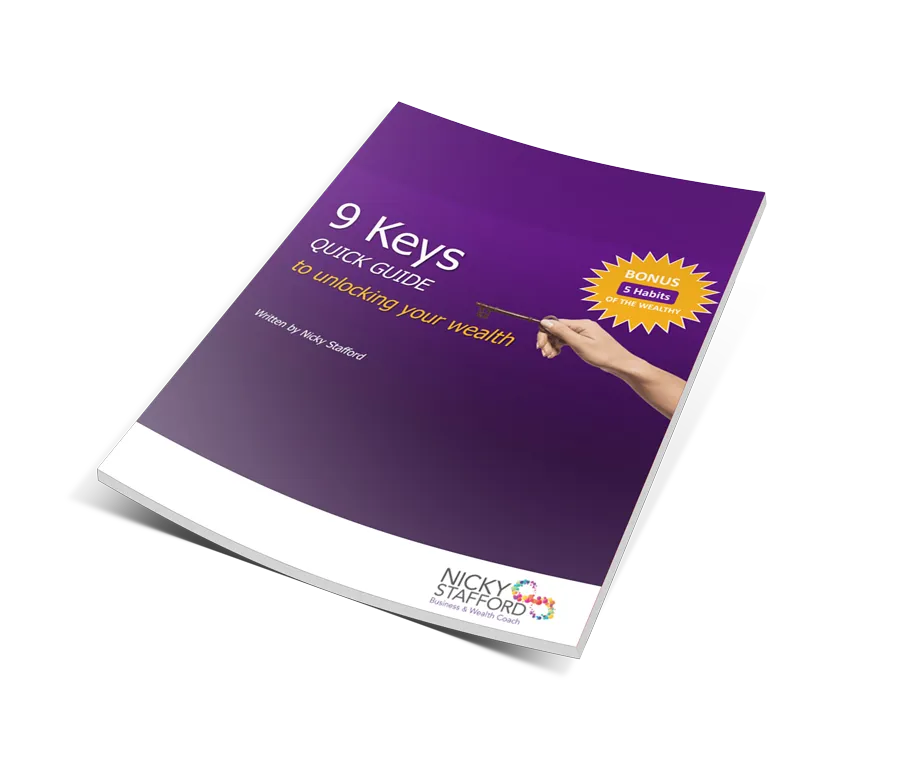
The Quick Guide To Unlocking Your Wealth
Ever Wondered How Some People Seem To Have Endless Amounts Of Money?
Find out in 9 simple steps.
So, How Do You Start?
Working With A Personal Wealth Coach Is Easy

The First Chat
In 15 minutes, we’ll talk about your goals, your current status and how I can help you walk a steady path to lasting financial freedom.

The Deep Dive
We’ll talk for three hours about your entire money story and identify the first steps you need to take (don’t worry, it will go FAST!)

Ongoing Service
Regular catch ups and introductions to all the right people will put the wheels in motion so you start seeing tangible results.
Yes, You Can Live a Wealthy Life
You have a coach for your fitness, why not have one for your wealth?
Get started with a free, no-obligation chat.


General Advice Warning
All strategies and information provided on this website are general advice only which does not take into consideration any of your personal circumstances. Please arrange an appointment to seek referral to the correct professional for financial, legal, tax or credit advice before acting on any information contained in this website. Nicky Stafford operates in Infinite Wealth Partners Pty Ltd. ABN: 76 635 869 644 Nothing on this site constitutes specific financial advice
© Nicky Stafford Business & Wealth Coaching 2026.